

The best common bird songs to learn are the five to ten species you repeatedly encounter where you live. Use a recent local checklist, filter it by season and habitat, and begin with three birds whose voices are clearly different. Once those are stable, add species that you actually hear and the birds you confuse with them.
“Common” depends on place and time
A Northern Cardinal can be a daily voice in much of eastern North America and absent from Europe. A European Robin or Common Blackbird may be familiar across many European neighborhoods yet irrelevant to a learner in Australia. Even within one region, a wetland, conifer forest, city park, and open grassland produce different sound communities.
Season changes the list again. Residents may call throughout the year, migrants pass for a few weeks, and many birds sing most intensely during breeding. A useful starter list therefore answers four questions: Where am I? What habitat will I visit? What month is it? Which species are reported frequently?
Three recognizable song patterns
These examples show how descriptions can organize listening. They are not a universal top-three list, and each species produces more sounds than the brief song pattern summarized here.
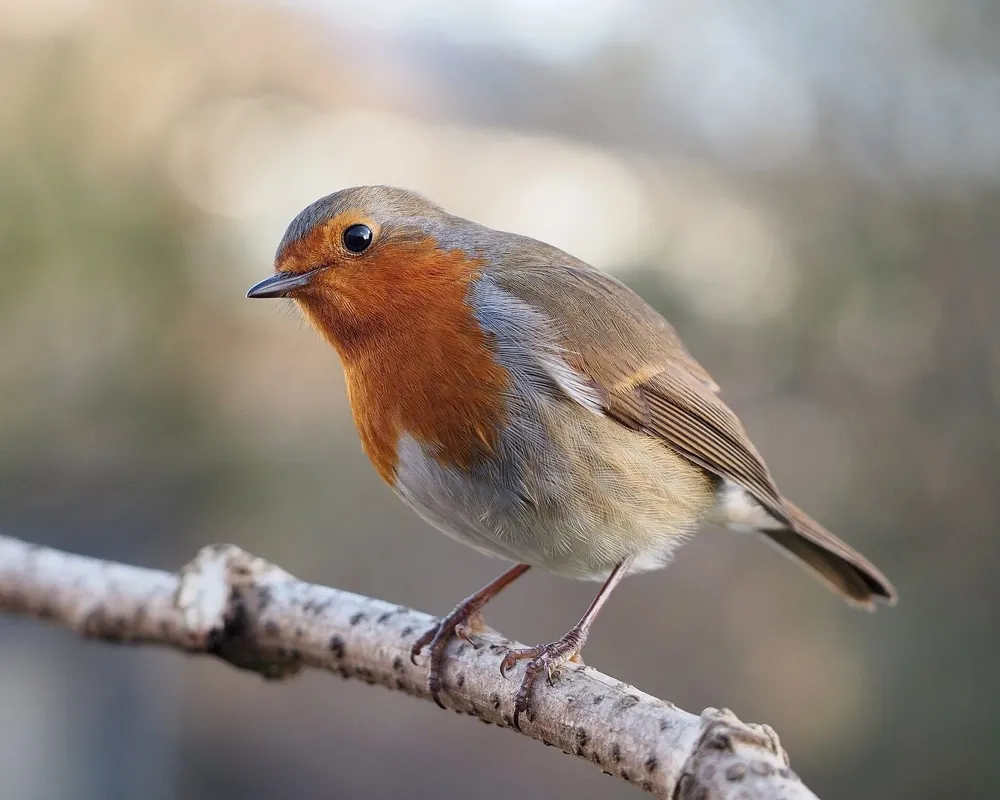
Listen for a delicate, high warble with thin notes, changing direction and uneven pauses.
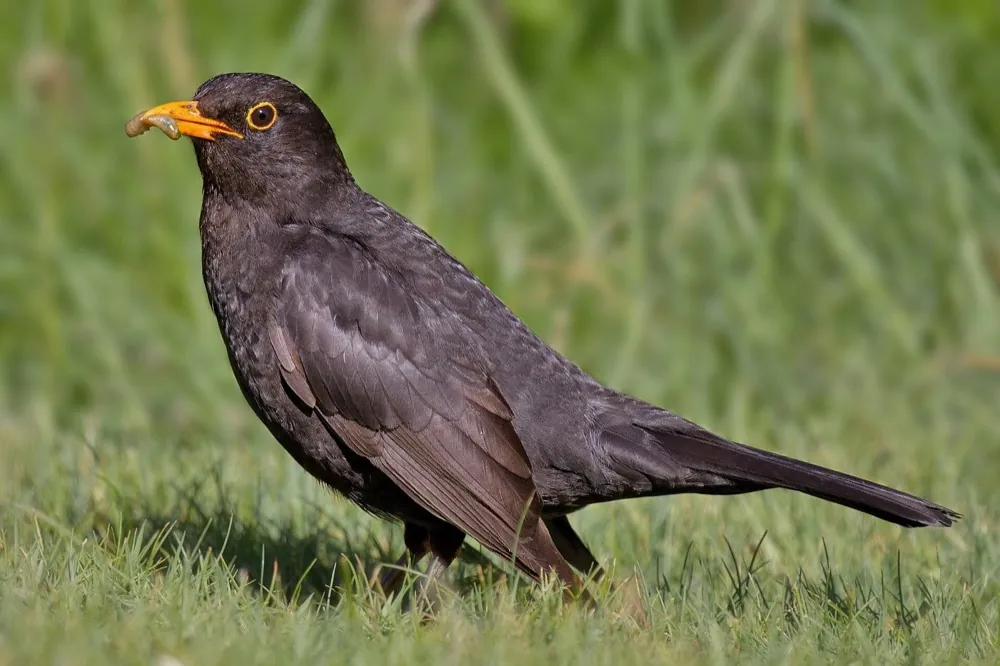
Listen for rich fluted phrases, usually unhurried and separated by noticeable pauses.
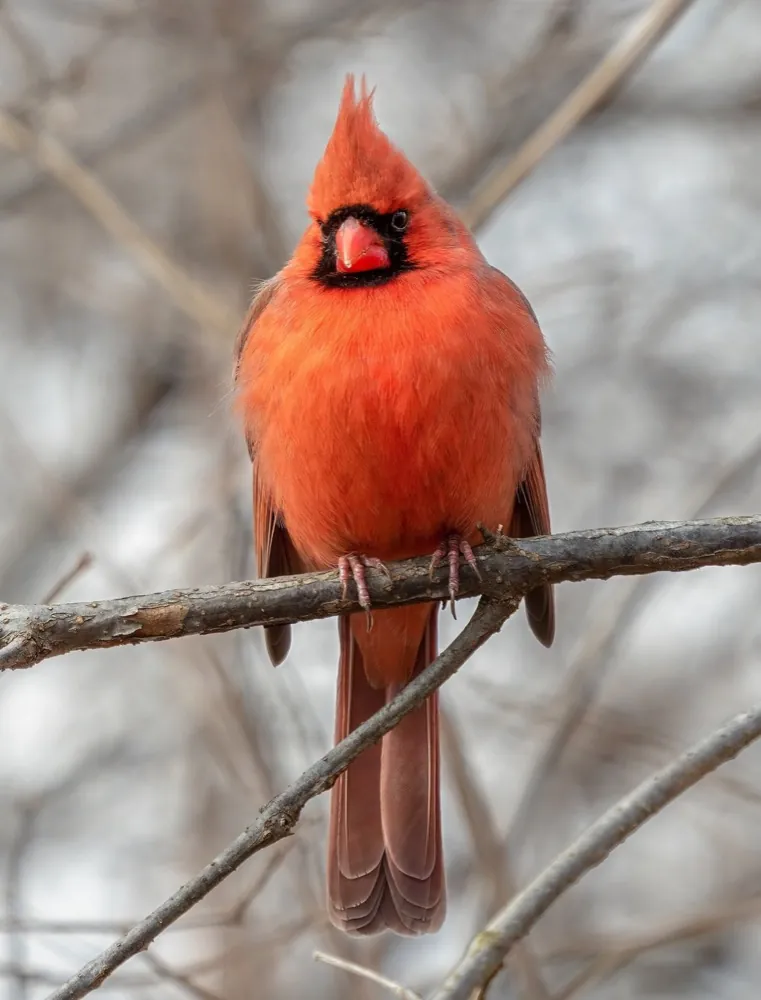
Listen for strong clear whistles shaped into repeated phrases with a steady pulse.
Try all three in the free bird-song quiz. Because the species cross two regions, the exercise teaches broad acoustic contrast; your daily practice should use a tighter local set.
How to build a five-bird starter list
- Find a local frequency source. Use a trusted regional bird organization, field guide, reserve checklist, or recent citizen-science observations.
- Filter by the next four weeks. Remove species not expected in the current season.
- Match your habitat. Keep birds likely in the garden, park, coast, woodland, or wetland you will actually visit.
- Choose three contrasting songs. For example, one clear whistler, one rapid triller, and one bird with separated phrases.
- Add a common confusion pair. Once the first three feel distinct, add two local birds whose sounds are genuinely similar.
Write each bird on a small listening card: common and scientific name, a photo, expected habitat, one song description, one call description, and links to at least two recordings. That card becomes more useful every time you add a field observation.
Ideas for regional starting points
Use the following as prompts to research, not fixed lists. Distribution within each region is uneven, and islands, elevation, biome, and migration can change the likely species completely.
- Europe: compare birds of gardens and woodland edges, then add local tits, finches, warblers, wrens, and thrushes as season allows.
- North America: begin with resident yard or park birds, then add seasonal sparrows, warblers, wrens, vireos, and thrushes relevant to your state or province.
- Latin America and the Caribbean: narrow aggressively by country, elevation, and habitat; a city garden and cloud forest share few practical starters.
- Africa and Madagascar: use country and biome checklists, then focus on locally abundant bulbuls, weavers, robin-chats, cisticolas, or sunbirds where applicable.
- Asia: start at country or subregion level and separate resident urban voices from seasonal migrants.
- Australia and the Pacific: identify the local biome and island first, then study conspicuous resident voices and common seasonal visitors.
Turn the list into recognition
Learn one sound category at a time. If your goal is dawn song, do not mix every alarm, flight, and contact call into the first session. Hear multiple examples, hide the names, and answer from shuffled recordings. After an error, compare the correct bird directly with your mistaken choice.
Take the same list outdoors. Record a description, time, habitat, and tentative identity before checking a reference. A field encounter supplies context and emotional salience that a recording library cannot reproduce.
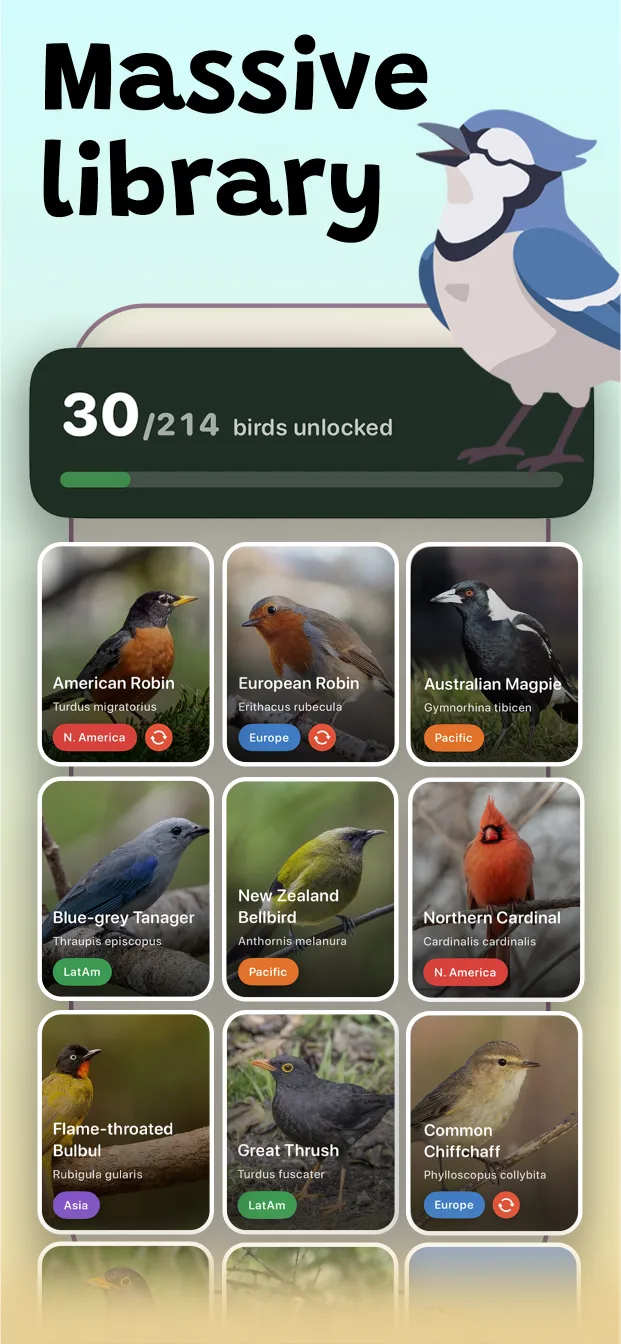
Syrinx organizes 308 species across six broad regions; learners begin in one home region and advance through small flocks of local voices.
Download Syrinx on the App Store →Syrinx provides regional learning maps, multiple recordings, photos, habitat notes, quizzes, and targeted review. It complements, rather than replaces, a current local checklist. For the complete practice sequence, follow how to learn bird songs in seven days.