
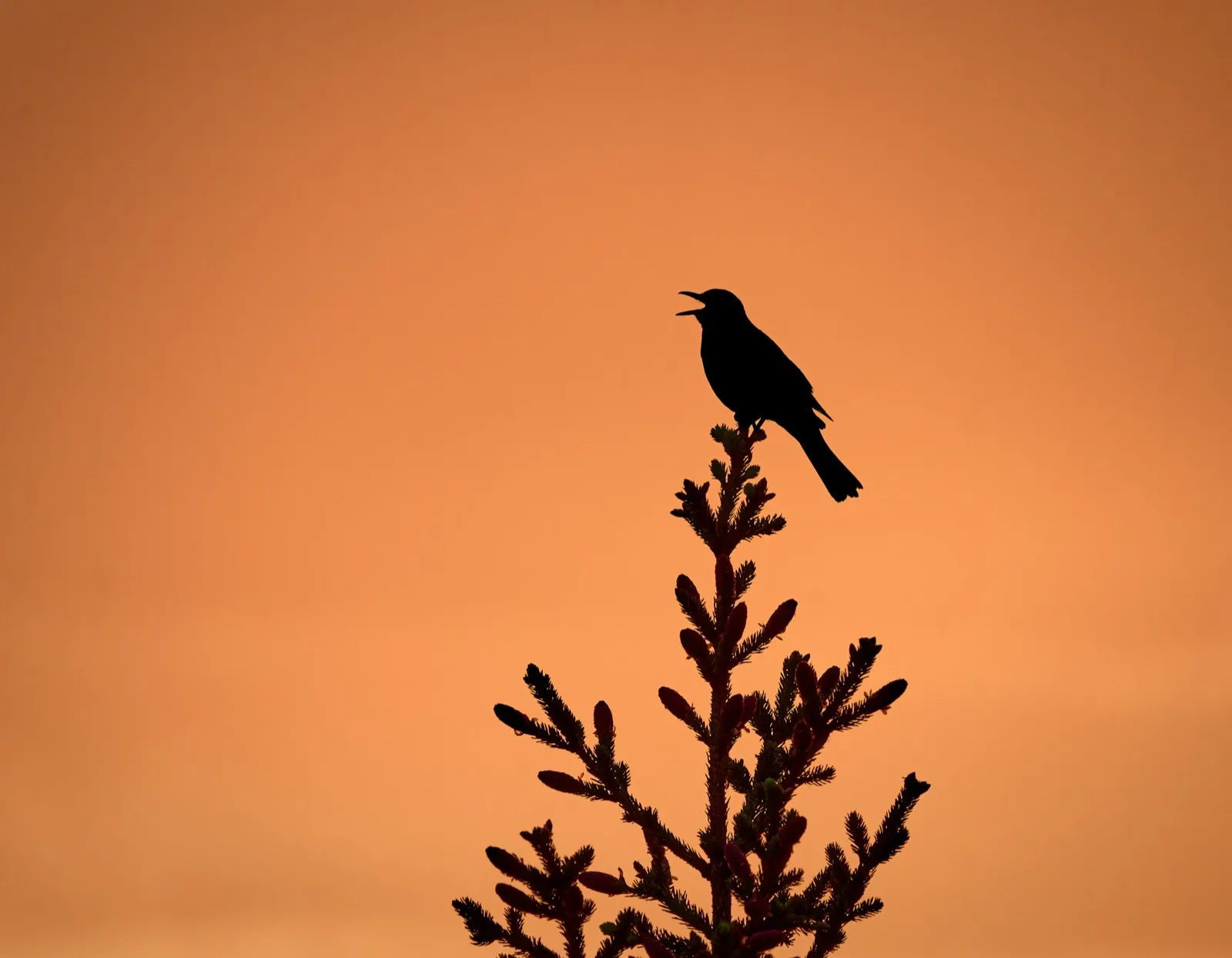
The fastest sustainable way to learn bird songs is to study three to five common local species at a time, compare them closely, test yourself without looking at the answer, and revisit the sounds across several days. Recognition grows when you have to retrieve a bird from memory. Simply hearing a long playlist can make songs feel familiar without making them identifiable.
A method that survives the dawn chorus
Birdsong is difficult at first because several problems arrive together: a sound is brief, the singer may be hidden, background species overlap, and one bird can produce more than one song or call. Reduce that load. Select birds you are likely to hear this week and learn a small contrast set.
For every recording, listen along four dimensions: pitch (high or low), rhythm (even, accelerating, broken), repetition (one phrase or recurring units), and tone (clear, buzzy, fluted, rough). These properties give you something stable to recall when the exact performance changes.
Your seven-day bird-song plan
Day 1: choose three voices
Pick three common species that sound unlike one another. Play one clean recording of each. Say the name aloud, inspect the bird, and write one short listening description in your own words. Keep the clue acoustic: “three clear whistles” is more transferable than “sounds cheerful.”
Day 2: recall before replay
Hide the name and shuffle the three recordings. Commit to an answer before checking. After an error, replay the missed bird beside the bird you chose. That direct comparison teaches the boundary between them. Finish after ten or twelve attempts; concentrated minutes beat an exhausted half hour.
Day 3: add natural variation
Use a second recording for each species, ideally from another individual or location. You are learning the pattern shared by performances, not memorizing a particular clip. Note which feature stays constant when tempo, background noise, or phrase length changes.
Day 4: connect sound and shape
Look at a spectrogram while listening. Time moves left to right and pitch rises vertically. Trace repeated notes, pauses, sweeps, and frequency bands. Then listen once with the image hidden. The visual pattern should direct attention back to the sound, not replace it.
Day 5: take a listening walk
Go out when birds are active, often around early morning. Stop before naming anything. Ask: Is the sound high or low? Repeated or free-flowing? Near the ground or in the canopy? Make a tentative identification, record the time and habitat, and seek visual confirmation when possible.
Day 6: add two birds
Keep the original three in review and add no more than two new species. Choose at least one that you encountered outdoors. Mix old and new recordings so the answer cannot be inferred from the session. Spend extra attempts on pairs you confuse.
Day 7: test in a mixed soundscape
Quiz all five using unfamiliar recordings, then listen outside or to a longer ambient recording. Your goal is not a perfect score. It is to isolate one known voice from the mixture and explain the evidence for your identification.
How to transfer practice outdoors
- Predict before you walk. Review the birds expected in that habitat and season.
- Locate the sound. Turn your head slowly and use changes in loudness to estimate direction.
- Describe before naming. A neutral description prevents an early guess from controlling everything you hear next.
- Use context as evidence. Habitat, range, season, time, and behavior can support or contradict an acoustic match.
- Verify uncertain records. See the bird, compare several reference recordings, or consult an experienced local birder.
Calls deserve separate attention. Songs are often longer and associated with territory or courtship, while calls may be short contact, alarm, flight, or begging sounds used by both sexes. Learn the sound category alongside the species so one bird does not seem like several unrelated birds.
Four mistakes that slow beginners down
- Starting with too many birds. A narrow set produces more successful comparisons and faster feedback.
- Reading the name while listening. Recognition requires a moment with the answer hidden.
- Using only one perfect recording. Real birds vary; introduce multiple examples after the first pattern is clear.
- Ignoring mistakes. The most valuable replay is the contrast between the right bird and the bird you confused with it.
How Syrinx supports this routine
Syrinx turns the same sequence into short iPhone sessions. You choose a home region, meet birds in small flocks, hear licensed field recordings, and answer from sound, name, photo, or spectrogram clues. Missed and confused species return in review instead of disappearing into a long library.
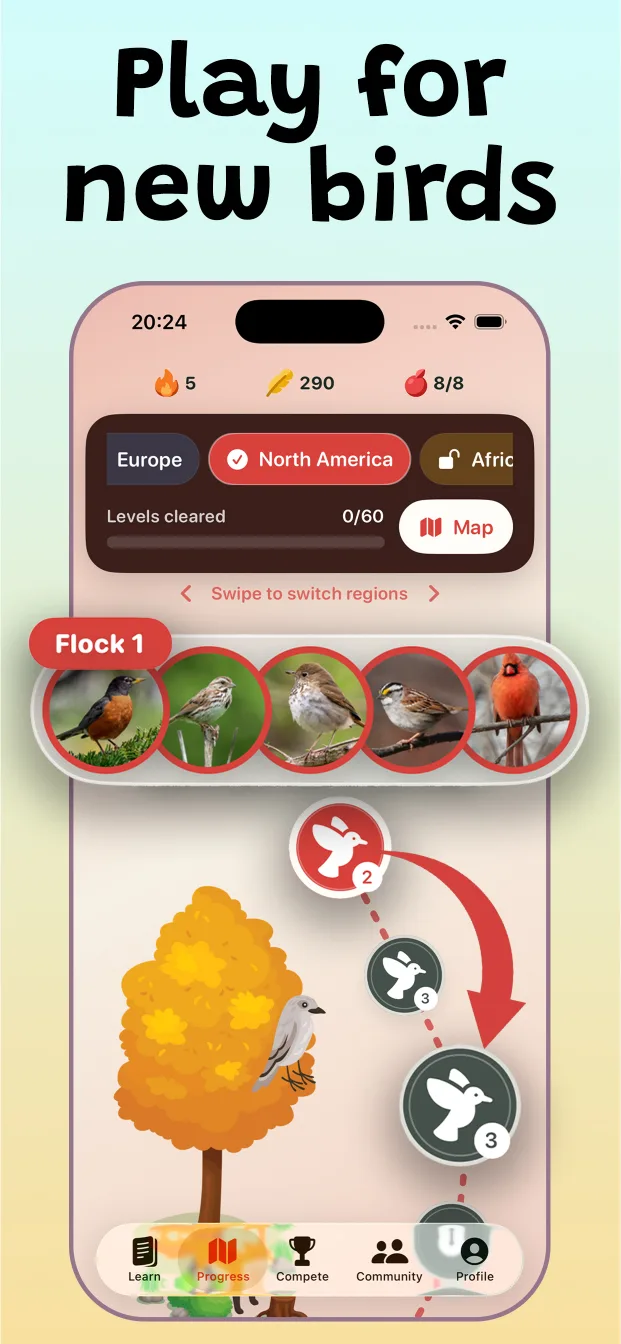
The regional learning map limits each step to a manageable flock, so review stays focused on the handful of voices you are learning this week.
Download Syrinx on the App Store →The app does not identify a live sound for you. Its purpose is to make you better at recognizing it. Use the three-recording free sound quiz, repeat this seven-day plan with local recordings, or continue learning in Syrinx.