
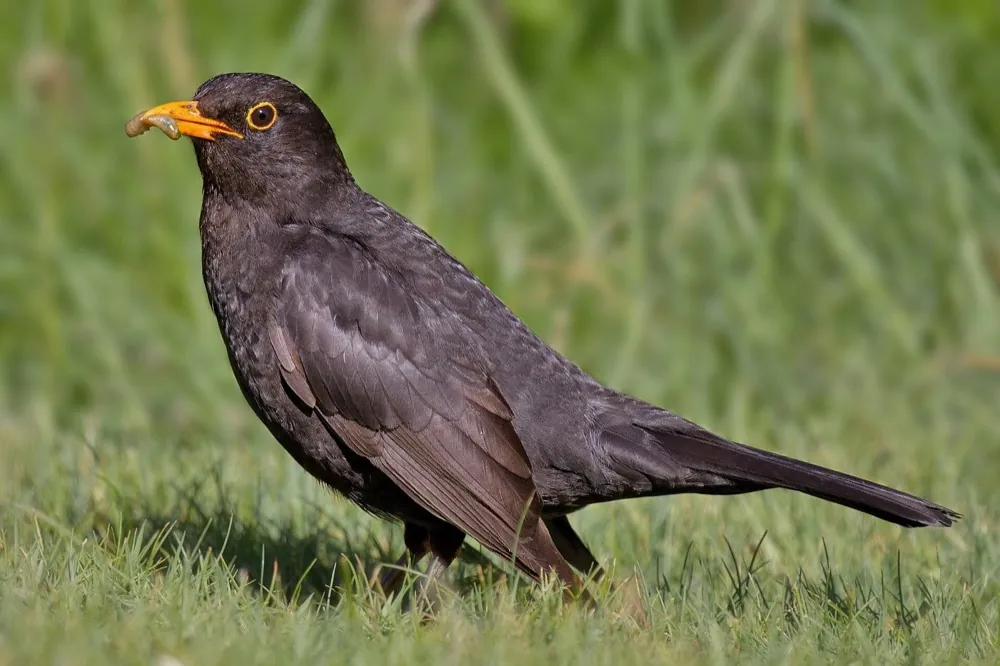
A sweet song from a garden tree could belong to either of these birds. The name often comes more easily once you stop trying to remember the whole tune. Compare the sound of the notes, then listen to how the bird fits them into a phrase.
This exercise compares the Common Blackbird (Turdus merula) and the European Robin (Erithacus rubecula). It is intended for listeners in Europe. The American Robin is a different species with a different song.
Listen to two real recordings
Play the blackbird first, then the robin. Headphones can make quiet details easier to hear indoors. Keep the volume comfortable: the aim is to notice a pattern, not make every background sound audible.
Common Blackbird
In this recording, listen for rounded, fluted phrases and the breathing space between them. Try tapping once when each phrase finishes.
Recording: XC815302 by steve, CC BY-SA 4.0. Excerpt prepared for the Syrinx website.European Robin
Now listen for a thinner, higher voice, with notes that change direction quickly. Notice how the little runs differ from the blackbird’s rounder phrases.
Recording: XC527484 by Benoît Van Hecke, CC BY-SA 4.0. Excerpt prepared for the Syrinx website.Make the comparison specific
“Musical” fits both birds, so it is not a very useful memory cue on its own. Pick something you can hear and compare. You might write “rounded notes, room between phrases” for this blackbird and “high, quick turns” for this robin. Those are starting descriptions for these clips, not rules that every individual must follow.
The RSPB describes the blackbird’s song as mellow and notes its varied phrases. Its robin account describes a higher whistle with short phrases and abrupt pauses. Both birds vary their delivery. A pause alone does not settle an identification; listen to the voice on either side of it. See the RSPB accounts for Blackbird and Robin.
Hide the names and try again
Ask someone to play one of the clips while you look away, or use the three-bird sound quiz. Say your answer and one reason for it. If you confuse the birds, play them directly beside each other again. Write down what you missed rather than adding another vague description to your notes.
Once the pair feels familiar, follow the recording links to find another example of each species. A new bird, microphone, or background can make the sound feel unfamiliar. Keep your first cue only if it still helps. For a longer routine, use our guide to remembering bird calls.
Check the voice outdoors
On your next walk, stop at a place where you can hear a single singer clearly. Describe it before choosing a name. Look for the bird when possible, and leave uncertain identifications uncertain. A song from a hidden tree can also belong to a species outside this exercise.
Keep song and call separate in your notes. The blackbird’s sharp alarm sounds are very different from the song above. Likewise, hearing a short robin call does not mean you will hear the same flowing pattern as its song. These two clips teach one sound category from each bird.
You do not need to play recordings to birds to practise. Listen quietly, use headphones for reference audio, and follow local guidance around wildlife. Our field identification guide explains how habitat and other observations can help you check a first guess.
Sources and recordings
- RSPB: Blackbird identification, song, and calls
- RSPB: European Robin identification and song
- Cornell Lab of Ornithology: How to learn bird songs and calls
- Website recording and image credits
The listening prompts are Syrinx practice suggestions. The recordings represent individual performances, not every song or call each species makes.