
If you have five minutes and two bird recordings, you have enough to make a start. Choose a pair, listen closely, and finish by naming one sound you want to notice outside. Set a timer if that helps you keep the session small.
This is a suggested exercise, not a promise that five minutes will make a species familiar. Repeat it with birds you expect near home and change the recordings as you improve. If you are choosing your first species, begin with our guide to common bird songs by region.
Minute 1: choose two different voices
Pick two birds from your local area. For this first session, choose recordings that sound noticeably different to you. There is time for difficult pairs later. Read each name, listen once, and look at a photograph of the bird.
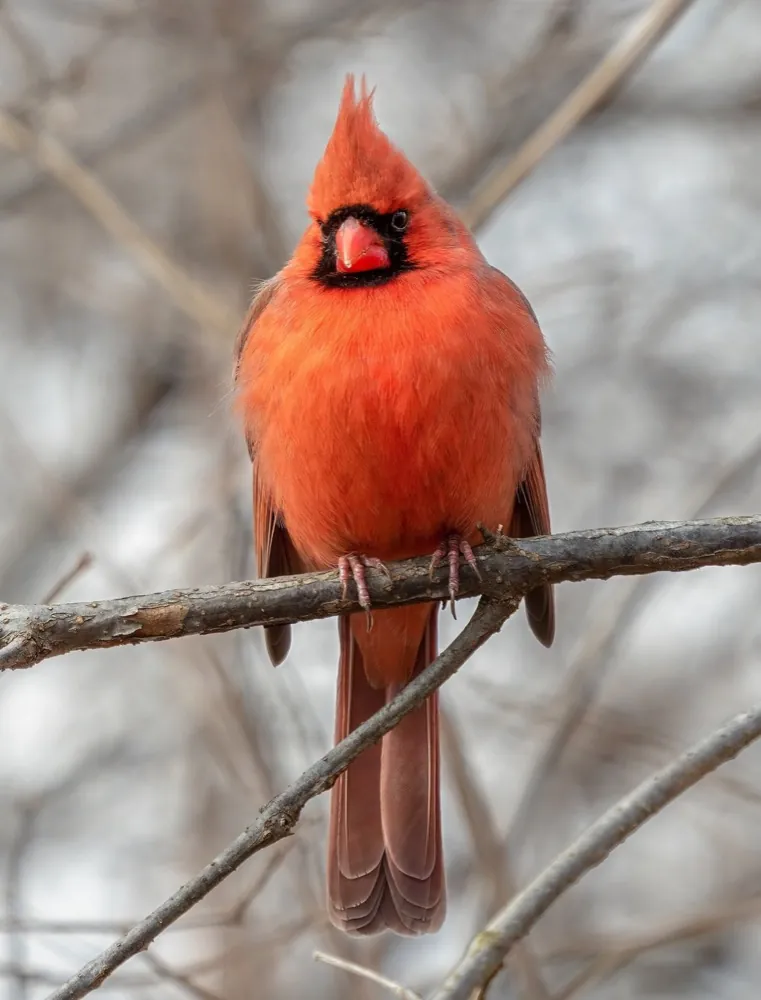
If you have no recordings ready, use the blackbird and European robin comparison. That pair suits European listeners. Our website quiz also includes a Northern Cardinal, but the sample spans two continents; it is not a list of birds you will hear everywhere.
Minute 2: give each sound a useful description
Replay a short phrase from each bird. Choose one quality to compare: the pace, repeated notes, pitch, or the texture of the voice. This follows the Cornell Lab’s approach of listening for rhythm, repetition, pitch, and tone.
Write a cue that points to the recording itself. “Clear whistles with a repeated shape” gives you something to check on the next listen. “A beautiful song” does not help you choose between two birds.
Try describing this Northern Cardinal
Listen to the repeated whistles. Does a phrase keep its pitch, or slide? If this bird is unfamiliar where you live, use the clip to practise describing sound, then return to your local pair.
Recording: XC797998 by steve, CC BY-SA 4.0. Excerpt prepared for the Syrinx website. More examples: Cornell Lab’s Northern Cardinal sounds.Minute 3: answer with the name hidden
Look away while someone plays one of your two recordings, or open a sound quiz. Choose a name before checking the answer. Then explain your choice in a few words. If you cannot choose, describe whatever you did hear and listen once more.
Keep the task small enough that you can pay attention. You are testing whether the sound brings the name to mind. A familiar play button, a photograph, or a recording’s position in a playlist can otherwise give you the answer without much listening.
Minute 4: replay the part that confused you
If you got an answer wrong, compare the missed bird with the one you chose. Focus on one difference. Perhaps both sound high, but one repeats evenly while the other changes direction. Rewrite your cue if it no longer seems useful.
If every answer was easy, try another recording of one species. Avoid making the session harder in several ways at once. A new recording is enough for today; you can add another bird next time.
Minute 5: choose something to listen for outside
Close the recordings. Recall your two names and their cues without replaying them. Pick one bird to listen for on your next walk, and note where you might encounter it. You can stop there.
When you go outside, give yourself time to hear a complete phrase. Use what you learned as a first clue, then check the habitat, location, and bird itself when visible. An unfamiliar singer is a reason to investigate, not force a match to today’s pair.
For tomorrow, leave yourself one simple instruction: replay a confused pair, find a second recording, or review today’s birds. Our seven-day learning plan expands this exercise into a week. If sound moves too quickly to describe, try following a spectrogram while listening.
Sources and further practice
- Cornell Lab: The basic parts of bird song
- Cornell Lab: How to learn bird songs and calls
- Cornell Lab: Northern Cardinal sounds
- Website recording and image credits
The five-minute timing and worksheet are Syrinx practice suggestions. The sources above support the listening features and species examples.